
 By
By Ethical Concerns in Artificial Intelligence Explained
Ethical issues in AI
Introduction
AI Ethics
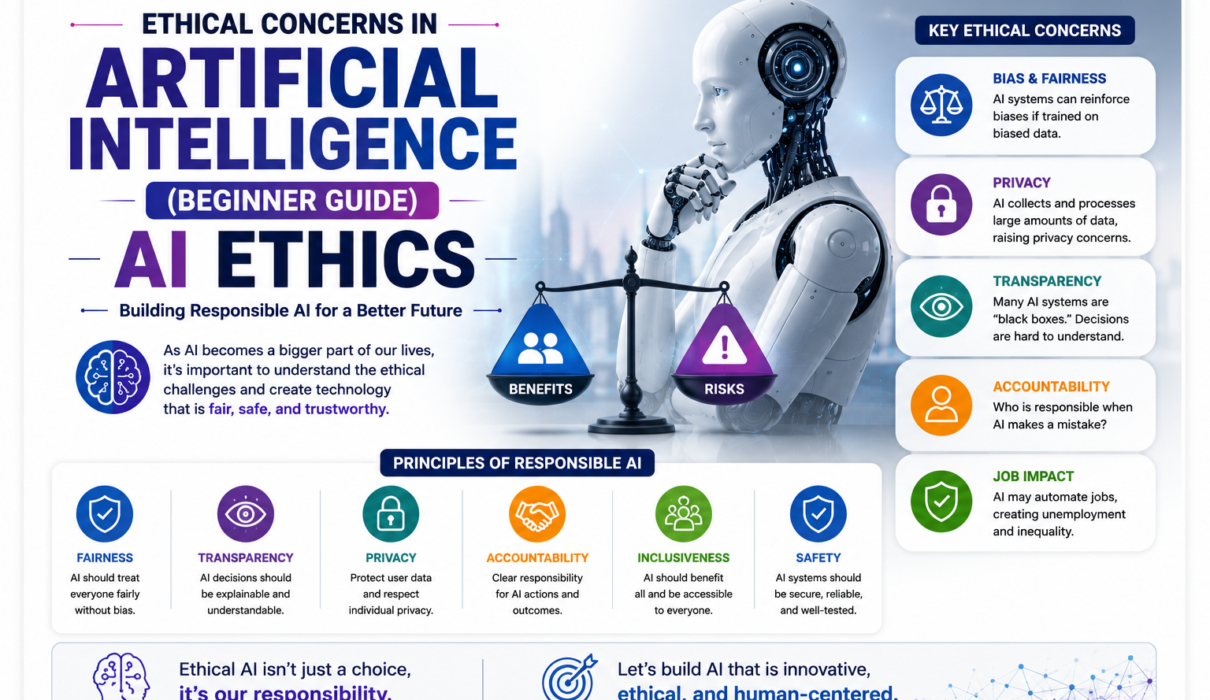
AI is powerful—but it also raises important ethical questions. As a beginner, understanding these issues is essential.
AI ethics focuses on ensuring that artificial intelligence is developed and used responsibly. The UNESCO Recommendation on the Ethics of Artificial Intelligence provides internationally recognized principles for ethical AI.
👉 Start with Blog 1: What is AI
1. Bias in AI
AI Bias
AI can become biased if trained on biased data.
Example:
- Hiring systems favoring certain groups
2. Privacy Concerns
AI Privacy
AI collects large amounts of personal data.
This raises questions about:
- Data safety
- User privacy
3. Lack of Transparency
Some AI systems act like “black boxes,” meaning:
- Decisions are unclear
- Hard to explain results
4. Job Displacement Concerns
AI automation can impact employment.
👉 Related: Read Blog 13: AI and Jobs
5. Responsibility and Accountability
Who is responsible when AI makes mistakes?
- Developers?
- Companies?
Organizations around the world have developed guidelines to promote trustworthy AI. The OECD AI Principles outline key values such as transparency, accountability, and human-centered design.
Why AI Ethics Matters
- Ensures fairness
- Builds trust
- Prevents misuse
Real-World Applications
Technology companies also publish their own responsible AI frameworks. You can explore Google’s approach through Google Responsible AI and Microsoft’s approach through Microsoft Responsible AI.
Final Thoughts
AI must be used responsibly. Understanding ethics makes you a smarter AI user.
Further Reading
Interested in learning more about Artificial Intelligence ethics? Explore these trusted resources:
- UNESCO – Ethics of Artificial Intelligence
- OECD AI Principles
- Google Responsible AI
- Microsoft Responsible AI
- OpenAI Safety
Call to Action
Do follow us on nextgenaitoolnest for more updates about AI.